


Do you have dysbiosis like I did?
- Shay G.

- Nov 18, 2025
- 3 min read
Updated: Apr 21
Bloating, cramping, gas, reflux, diarrhea, constipation… Do any of these sound familiar?
What about fatigue, brain fog, joint pain, weight gain, or even seasonal allergies?
All of these can be signs of dysbiosis: an imbalance of bacteria in your gastrointestinal tract.
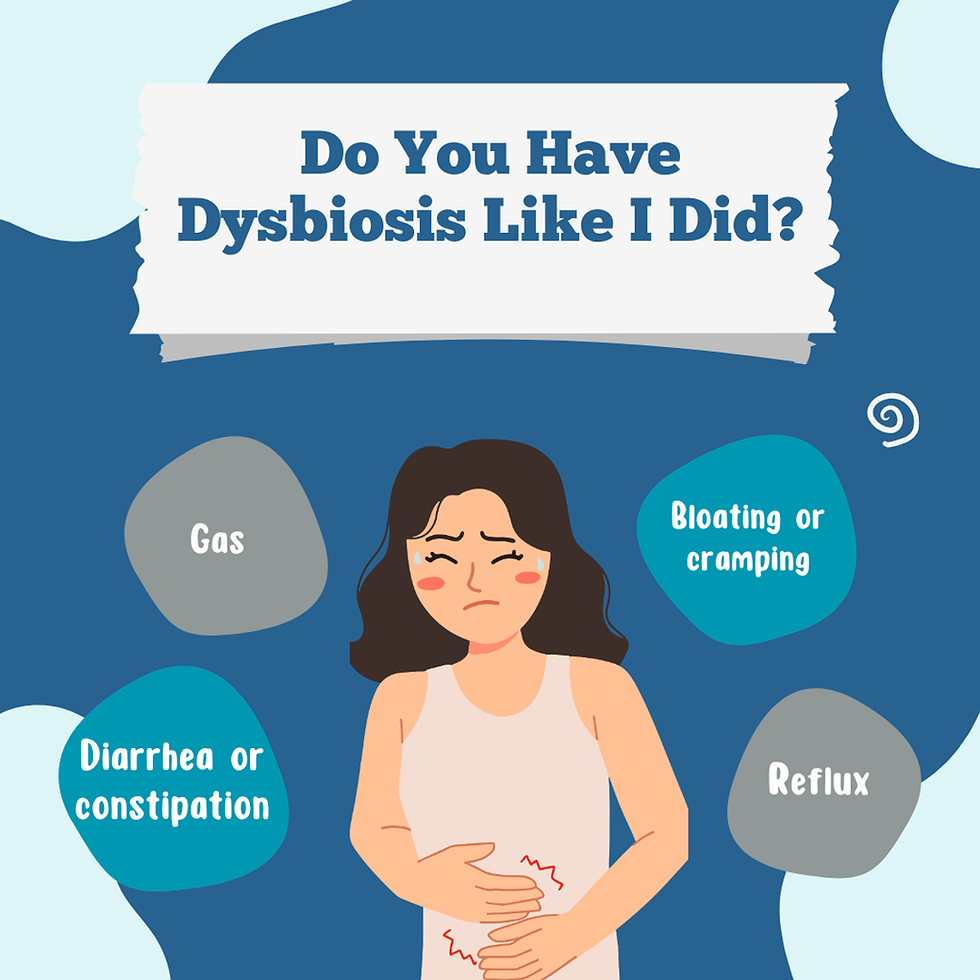
Do you have dysbiosis like I did?
My Story
Before I began practicing functional medicine, I struggled with many of these symptoms myself. I had bloating, gas, abdominal pain, constipation, headaches, fatigue, and brain fog that just wouldn’t go away.
When I worked in traditional medicine, I didn’t know how to help myself, and honestly, none of my colleagues did either. My gastroenterologist diagnosed me with IBS with constipation and told me to take more MiraLAX.
That was not the answer I was looking for.
Once I began studying functional and integrative medicine, everything changed. I discovered that dysbiosis is not only real, it’s reversible. By rebalancing my gut microbiome, I healed my digestion, improved my energy, cleared my brain fog, and finally felt like myself again.
Understanding Dysbiosis
Our digestive tract houses trillions of microbes, including bacteria, yeast, and even viruses, from our mouth to our colon. This internal ecosystem, known as the microbiome, plays a critical role in everything from digestion and immunity to mood, metabolism, and hormone balance.
When harmful bacteria, yeast, or parasites overgrow — or when we lose diversity in our beneficial microbes — dysbiosis develops.
Dysbiosis can cause:
Digestive symptoms: bloating, gas, constipation, diarrhea, or reflux
Systemic symptoms: headaches, fatigue, joint pain, skin rashes, anxiety, allergies, or brain fog
Dysbiosis and Leaky Gut
Dysbiosis often leads to leaky gut, where the intestinal lining becomes permeable and allows bacteria, toxins, and undigested food particles to enter the bloodstream.
This triggers an immune response, releasing inflammatory cytokines such as IL-6 and TNF-α, which can contribute to:
Weight gain and insulin resistance
Joint pain and fatigue
Anxiety, brain fog, and low mood
Increased risk of autoimmune disease and even certain cancers
Because 70% of our immune system lives in the gut, an imbalanced microbiome weakens immune defense. Low levels of secretory IgA, the antibody that lines and protects the gut,can leave us vulnerable to chronic infections.
And here’s something many people don’t realize: about 90% of serotonin (your “feel-good” neurotransmitter) is made in the gut, along with dopamine and GABA, which affect mood and sleep.
When dysbiosis disrupts this process, we experience anxiety, depression, irritability, and poor sleep, further perpetuating the cycle.
The Role of Diet, Stress, and Medications
Diet and Lifestyle
Inflammatory foods such as gluten and dairy raise a protein called zonulin, which loosens the tight junctions in the gut lining.
Sugar feeds pathogenic bacteria and yeast.
Alcohol irritates the gut wall, while processed foods, additives, and artificial sweeteners further disturb microbial balance.
Chronic Stress and Sleep Deprivation
Living in constant “fight or flight” mode raises cortisol, which breaks down the mucosal barrier and depletes secretory IgA, weakening gut immunity.
Lack of sleep shifts the microbiome toward inflammatory species, amplifying dysbiosis.
Medications
Certain medications are major disruptors:
Antibiotics wipe out good and bad bacteria alike, allowing opportunistic microbes to overgrow.
NSAIDs (like Advil and Aleve) erode the gut lining.
Proton pump inhibitors (like Prilosec or Nexium) reduce stomach acid, impair digestion, and promote bacterial overgrowth.
The Good News
The gut can heal. With the right testing, targeted supplementation, dietary adjustments, and lifestyle support, you can restore microbial balance, often in just a few weeks.
We often recommend a GI-Map or TrioSmart Breath Test to diagnose dysbiosis and/or SIBO (Small Intestinal Bacterial Overgrowth).
We then tailor your gut protocol to your individual needs, based on your results, your symptoms, and your health goals.
Ready to Begin Your GutRenewal?
A happy gut means a healthier, happier you. Contact us today to schedule your consultation.


Comments